Introduction: The Rising Debate of AI vs Human Jobs
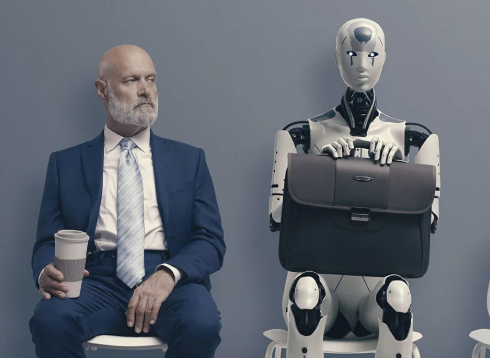
The conversation around AI vs human jobs has become one of the most important workforce discussions of the 21st century. As artificial intelligence (AI) continues to advance rapidly, industries worldwide are experiencing major shifts in how work is performed, who performs it, and what skills are required. While some fear widespread job loss, others see AI as a powerful tool for productivity and new job creation.
The future of work will not be a simple competition between humans and machines. Instead, it will be a transformation where AI and humans increasingly collaborate, reshaping job roles across nearly every industry.
How AI Is Changing the Job Market
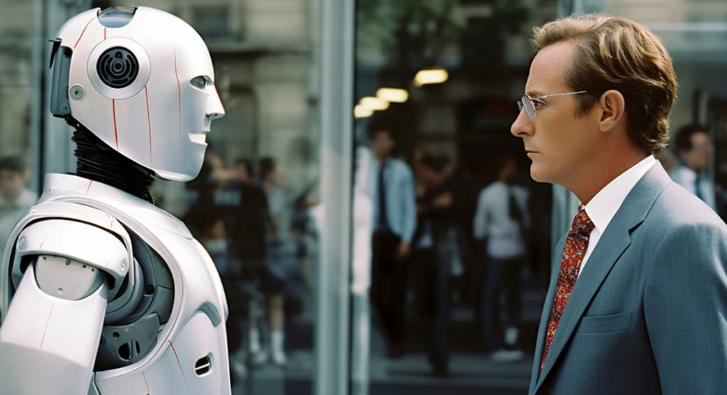
Artificial intelligence is already influencing employment patterns in several ways. Automation, machine learning, and robotics are being used to handle repetitive and data-heavy tasks that were once performed by humans.
1. Automation of Repetitive Tasks
Jobs involving routine and predictable tasks are the most affected. For example:
- Data entry and processing
- Basic customer service (chatbots and virtual assistants)
- Manufacturing assembly line work
- Inventory management and logistics tracking
AI systems can complete these tasks faster, more accurately, and at lower cost, leading to reduced demand for human labor in these areas.
2. Transformation of Knowledge Work
AI is also reshaping white-collar professions. Tools powered by generative AI can now:
- Draft reports and emails
- Analyze large datasets
- Generate marketing content
- Assist in legal research
Rather than replacing professionals entirely, AI is changing how they work, allowing them to focus on higher-level decision-making and creativity.
Jobs at Risk vs Jobs That Will Grow
The impact of AI is uneven across industries. Some jobs are at higher risk of automation, while others are expected to grow significantly.
Jobs at Higher Risk
Roles with repetitive, rule-based tasks face the greatest disruption, including:
- Telemarketers
- Cashiers
- Basic administrative assistants
- Entry-level data analysts
These jobs are increasingly being automated or augmented by AI systems.
Jobs That Will Grow
On the other hand, AI is also creating demand for new roles, such as:
- AI specialists and machine learning engineers
- Cybersecurity experts
- Data scientists
- Robotics technicians
- AI ethics and policy professionals
Additionally, jobs that require emotional intelligence, creativity, and human interaction remain difficult to automate.
The Strength of Human Skills in the AI Era
Despite rapid technological growth, humans still hold a strong advantage in several key areas that AI cannot easily replicate.
1. Emotional Intelligence
Jobs involving empathy, communication, and human relationships are less likely to be replaced. For example:
- Healthcare workers
- Therapists and counselors
- Teachers
- Social workers
AI may assist in these fields, but human interaction remains essential.
2. Creativity and Innovation
While AI can generate content, it lacks true originality and lived experience. Human creativity continues to drive:
- Art and design
- Strategic business innovation
- Scientific discovery
- Entrepreneurship
3. Critical Thinking and Ethics
Humans are needed to interpret complex situations, make ethical decisions, and apply judgment in uncertain environments. AI lacks moral reasoning and depends on human oversight.
AI as a Job Creator, Not Just a Job Destroyer
A common misconception is that AI only eliminates jobs. In reality, technological revolutions historically create more jobs than they destroy over time. AI is expected to follow a similar pattern.
New Industries Emerging from AI
AI is already fueling new sectors, including:
- Autonomous vehicles
- Smart healthcare systems
- AI-powered finance tools
- Personalized education platforms
Each of these industries requires human professionals for development, management, and oversight.
Human-AI Collaboration Roles
Rather than replacing humans, many jobs will evolve into hybrid roles where humans work alongside AI systems. Examples include:
- Doctors using AI for diagnosis support
- Marketers using AI for customer insights
- Engineers using AI for design optimization
- Writers using AI for content assistance
This collaboration increases productivity rather than eliminating employment entirely.
The Future Workplace: What to Expect
The workplace of the future will look very different from today. Several key trends are expected to define the AI-driven economy.
1. Hybrid Workforces
Companies will rely on a combination of human employees and AI systems. Routine tasks will be handled by machines, while humans focus on strategy and innovation.
2. Remote and Digital Work Expansion
AI-powered tools will continue to support remote work, enabling global collaboration without physical offices.
3. Continuous Learning and Upskilling
Workers will need to constantly update their skills. Lifelong learning will become essential as job requirements evolve quickly due to AI advancements.
4. Increased Demand for Tech Literacy
Even non-technical roles will require basic understanding of AI tools, data interpretation, and digital systems.
Challenges of AI in the Job Market
While AI brings opportunities, it also presents challenges that society must address.
1. Job Displacement
Workers in low-skill or repetitive roles may face unemployment if they cannot transition to new careers.
2. Income Inequality
High-skilled workers who can work with AI may benefit significantly, while others may struggle, widening economic gaps.
3. Ethical Concerns
AI decision-making in hiring, policing, and finance raises concerns about bias, transparency, and accountability.
Preparing for an AI-Driven Future
To succeed in the evolving job market, individuals and organizations must adapt.
For Individuals:
- Learn digital and AI-related skills
- Focus on creativity, communication, and problem-solving
- Engage in continuous education and training
- Explore emerging career fields in technology
For Businesses:
- Invest in employee reskilling programs
- Adopt AI responsibly and ethically
- Focus on human-AI collaboration models
- Prepare for workforce restructuring
Conclusion: AI and Humans Will Coexist, Not Compete
The future of AI vs human jobs is not a battle with a single winner. Instead, it is a transformation of the global workforce where both AI and humans play essential roles.
While AI will automate many tasks, it will also create new opportunities and industries. Humans will remain vital for creativity, empathy, leadership, and ethical decision-making.
The most successful individuals and organizations will be those that embrace AI as a partner rather than a threat, adapting to change and leveraging technology to enhance human potential.