AI Business Tools: How Smart Software Is Quietly Rewriting the Rules of Work
There’s a quiet shift happening in the background of modern business. It’s not as loud as a new social media platform or as dramatic as a market crash, but it’s arguably more influential. Artificial intelligence has slipped into everyday business operations, and now it’s doing everything from writing emails to predicting customer behavior.
The interesting part? Most people are already using AI business tools without even thinking of them as “AI.” And that’s exactly why they’re becoming so powerful—they’re blending into the flow of work rather than disrupting it.
So what exactly are these tools doing, and why are businesses so obsessed with them right now?
What AI Business Tools Actually Are (Without the Buzzwords)
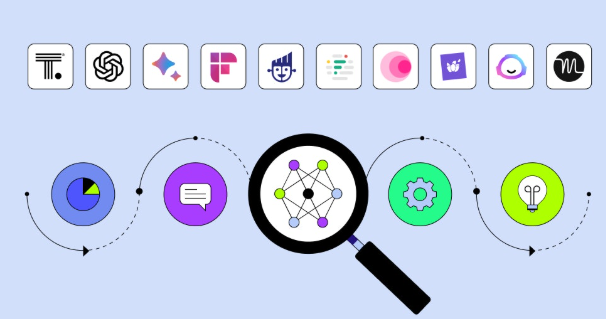
At their core, AI business tools are software systems designed to automate, assist, or enhance work using machine learning or language models. In practice, they help people complete tasks faster, reduce repetitive effort, and sometimes even improve decision-making quality.
Think of them as extremely capable assistants who don’t get tired, don’t forget instructions, and don’t complain about repetitive work.
For example, writing and reasoning tools like ChatGPT help users draft reports, brainstorm ideas, and summarize complex information in seconds. You can explore it here: ChatGPT
Similarly, productivity platforms such as Notion AI help teams generate documents, summarize meeting notes, and organize workflows: Notion AI
But AI business tools aren’t limited to writing. They now stretch across marketing, sales, customer service, finance, and automation—quietly embedding themselves into almost every corner of digital work.
Productivity: The New Digital “Second Brain”
If there’s one area where AI tools have become instantly valuable, it’s productivity. Modern work is full of small, repetitive tasks that don’t require deep thinking but still consume time and energy.
Writing emails, summarizing meetings, generating reports—none of these are difficult on their own, but together they create constant cognitive clutter.
AI tools act like a “second brain” that clears that clutter. Instead of starting from scratch, professionals can generate drafts and refine them. Instead of scanning long meeting notes, they get structured summaries in seconds.
Tech ecosystems like Microsoft have taken this further by integrating AI directly into everyday office software through tools like Microsoft Copilot: Microsoft Copilot
The real win here isn’t just speed. It’s mental space. When friction disappears from routine tasks, people naturally spend more energy on ideas, strategy, and problem-solving.
Marketing and Sales: From Guesswork to Precision
Marketing used to rely heavily on intuition. You’d test campaigns, watch the results, and slowly adjust. It worked—but it was slow and often expensive.
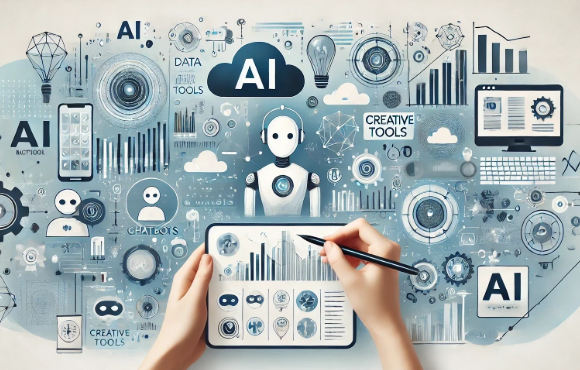
Now AI tools analyze behavior patterns at scale and offer predictions that would be impossible to calculate manually.
Platforms like HubSpot provide AI-powered insights for customer engagement and lead tracking: HubSpot
Meanwhile, Salesforce uses AI to help businesses forecast sales, prioritize leads, and personalize customer interactions: Salesforce
It’s a bit like upgrading from guessing the weather to having a real-time forecast system that also tells you what to wear. You still make the decisions—but with far better information.
Customer Support: Faster Answers, Fewer Frustrations
Few things frustrate customers more than slow support systems. Waiting on hold, repeating issues, or being passed between agents is still common in many industries.
AI is changing that experience by handling routine requests instantly. Password resets, order tracking, basic troubleshooting—these are now often automated.
Tools like Zapier connect apps and automate workflows behind the scenes, allowing systems to respond without human intervention: Zapier
At the same time, conversational tools like chatbots are becoming more natural and context-aware, reducing the “robotic” feeling customers used to complain about.
Still, the best companies don’t rely entirely on automation. They mix AI speed with human empathy, especially when situations become complex or emotional.
Writing, Creativity, and Everyday Workflows
One of the most surprising shifts has been in writing and creative work. Tasks that once required a blank page and a lot of mental effort can now start with an AI-generated draft.
Tools like Grammarly help refine tone and clarity: Grammarly
Meanwhile, AI copywriting platforms like Jasper AI assist marketers and creators in generating structured content ideas: Jasper AI
The key point isn’t that AI replaces creativity. It lowers the barrier to starting. And once something exists—even a rough draft—it’s much easier to improve than to begin from nothing.
Decision-Making: Making Sense of Data Without Getting Lost in It
Businesses have never lacked data. The real challenge has always been making sense of it.
AI tools now act like interpreters, translating raw numbers into clear explanations. Instead of digging through spreadsheets, managers can ask questions in plain language and get structured answers.
It’s similar to switching from reading a map covered in symbols to using a GPS that tells you exactly where to turn. You still control the direction—but you’re no longer guessing the route.
The Downsides: What Gets Lost in the Excitement
AI tools are powerful, but they’re not flawless.
Sometimes they generate confident but incorrect answers. Other times, they oversimplify complex situations. And in some cases, over-reliance on automation can weaken human judgment.
There’s also the risk of “tool overload”—where teams adopt too many systems without fully integrating them, creating more confusion instead of less.
The companies that succeed with AI aren’t the ones that use the most tools. They’re the ones that use them deliberately.
Final Thoughts: It’s Not About Replacement, It’s About Amplification
AI business tools are not just another software trend. They’re becoming part of the infrastructure of modern work.
But their real value isn’t in replacing people—it’s in amplifying what people can do. They remove repetitive effort, speed up decision-making, and open space for more meaningful thinking.
Still, the real advantage won’t go to businesses that adopt AI the fastest. It will go to those that learn how to use it wisely—balancing automation with human judgment.
Because at the end of the day, AI doesn’t remove the need for thinking. It just makes thinking faster, easier, and more scalable than ever before.